

MZTherapyOnline

bilingualism-speech-delay-myths-facts-2
Speech therapy

Bilingualism and Speech Delay: Will Teaching Two Languages Slow Down My Child?

Bilingualism and Speech Delay: Will Teaching Two Languages Slow Down My Child? «Should we stop speaking Spanish at home?» This is often the first question bilingual parents ask when they notice their child isn’t meeting communication milestones. In the United States, many families are still told by well-meaning but misinformed professionals that two languages will «confuse» a child with a delay. The short answer is: No. Bilingualism does not cause speech or language delays. In fact, research shows that the bilingual brain is incredibly resilient and capable. At MZ Therapeutic Consultants, we specialize in debunking bilingual speech delay myths and helping families embrace their heritage while seeking the support their child needs. Busting the Most Common Bilingual Speech Delay Myths To support your child effectively, we must first separate fiction from clinical fact. Let’s look at the three most pervasive myths surrounding bilingual language development. Myth 1: Learning two languages causes «confusion» Parents often worry when they hear their child mix languages—a phenomenon known as «code-switching» (e.g., «I want juice de manzana»). The Fact: Code-switching is not a sign of confusion; it is a sign of linguistic sophistication. It shows the child is using all available resources to communicate. Research indicates that bilingual children reach the same basic milestones as monolingual children. Myth 2: You should «drop» one language to help the child catch up This is perhaps the most damaging of all bilingual speech delay myths. The Fact: If a child has a language disorder, they will struggle in both languages. Removing the home language (usually Spanish) does not fix the underlying disorder; it only isolates the child from their family and cultural identity. Raising Bilingual Kids with Language Delay: What to Look For When raising bilingual kids with language delay, the diagnostic process is slightly different. We don’t just look at how many words the child says in English; we look at their Total Conceptual Vocabulary. The Concept of Total Vocabulary If a child knows the word «dog» in English and «perro» in Spanish, a monolingual therapist might count that as one concept. However, a bilingual expert understands that the child’s brain has successfully mapped two different labels to the same concept. When evaluating a bilingual child, we must measure their progress across both languages to get a true picture of their cognitive and linguistic abilities. If the child is struggling to follow directions or express needs in both Spanish and English, then a true language delay is likely present. The Risks of Forcing Monolingualism Forcing a bilingual family to speak only English at home often leads to «subtractive bilingualism.» This can have serious consequences: How to Support Your Bilingual Child’s Language Development If you are raising bilingual kids with language delay, the best thing you can do is provide a «language-rich» environment in the language you speak most naturally. The MZ Advantage: Specialized Online Bilingual Therapy Finding an SLP who truly understands the nuances of bilingualism can be difficult. Most local clinics are staffed by monolingual therapists who may inadvertently reinforce bilingual speech delay myths. Our online bilingual therapy services bridge this gap. We provide: Conclusion: Bilingualism is a Superpower Your child’s delay is not caused by your beautiful culture or your family’s language. In fact, being bilingual is a cognitive «superpower» that provides lifelong advantages in problem-solving and social awareness. If you suspect a delay, the answer isn’t to say «goodbye» to your language; it’s to say «hello» to the right support. Are you worried about your child’s bilingual progress? Don’t let myths delay the help they deserve. Contact MZ Therapeutic Consultants today for a consultation with a licensed bilingual expert who understands your family’s journey.

speech-therapy-stroke-recovery-aphasia-3
Speech therapy

Reclaiming Your Voice: The Role of Speech Therapy in Stroke Recovery

Reclaiming Your Voice: The Role of Speech Therapy in Stroke Recovery A stroke is a life-altering event that happens in an instant but leaves a long-lasting impact on a person’s identity. For many survivors, the most frustrating consequence isn’t the physical limitation, but the sudden inability to communicate. Whether it’s struggling to find the right word, slurring speech, or failing to understand a loved one, communication barriers can lead to profound isolation. The good news is that the brain possesses a remarkable ability to rewire itself. Specialized speech therapy for stroke recovery is the bridge between silence and connection. At MZ Therapeutic Consultants, we empower adult survivors to regain their language skills using evidence-based techniques delivered through a convenient, high-tech platform. Understanding Post-Stroke Communication Disorders A stroke can affect the brain’s language centers in different ways. Identifying the specific challenge is the first step toward effective treatment. Aphasia Aphasia is a language disorder that affects the ability to produce or understand speech, as well as reading and writing. It does not affect intelligence, but it «traps» the person’s thoughts inside. Apraxia of Speech This is a motor speech disorder. The brain knows what it wants to say, but the neural pathway to the mouth muscles is disrupted, making it difficult to coordinate the movements needed to form sounds. Dysarthria Often characterized by «slurred» speech, dysarthria occurs when the muscles used for speaking are weakened or paralyzed following the stroke. The Science of Neuroplasticity: Why It’s Never Too Late For a long time, it was believed that if a patient didn’t recover their speech within the first few months, they never would. We now know this is false. Thanks to neuroplasticity, the brain can create new neural pathways even years after an injury. Consistent, high-intensity speech therapy for stroke recovery stimulates these new connections. While early intervention (the first 6 months) is the «golden window» for rapid progress, chronic stroke survivors can still make significant gains in their communication and quality of life with the right therapeutic approach. Why Online Therapy is the «New Gold Standard» for Stroke Survivors Traveling to a clinic can be exhausting and physically challenging for someone recovering from a stroke. Telepráctica (online therapy) offers unique advantages: [Image: A senior adult laughing and communicating with a speech therapist via a laptop screen from their home office] Strategies to Support Recovery at Home If you are a caregiver, your role is vital. Here are some tips to complement speech therapy for stroke recovery: Personalized Adult Rehabilitation at MZ Therapeutic Consultants At MZ Therapeutic Consultants, we don’t believe in a one-size-fits-all approach. Our adult speech therapy programs are designed around the patient’s specific life goals—whether that’s returning to work, talking to grandchildren, or simply regaining independence in daily tasks. Our U.S. licensed experts specialize in neurological rehabilitation, ensuring that your treatment is based on the latest clinical research. Communication is the essence of being human. A stroke may have taken your voice, but it doesn’t have to be the final word. Through specialized speech therapy for stroke recovery, technology, and a dedicated support system, you can rebuild the bridge to your community and your loved ones. Ready to start your journey back to communication? Contact MZ Therapeutic Consultants today for a comprehensive evaluation. Recovery is a marathon, and we are here to run it with you.

terapia-de-lenguaje-online-autismo-tdah-2
Speech therapy

Terapia de lenguaje online para autismo y TDAH: ¿Es realmente efectiva?

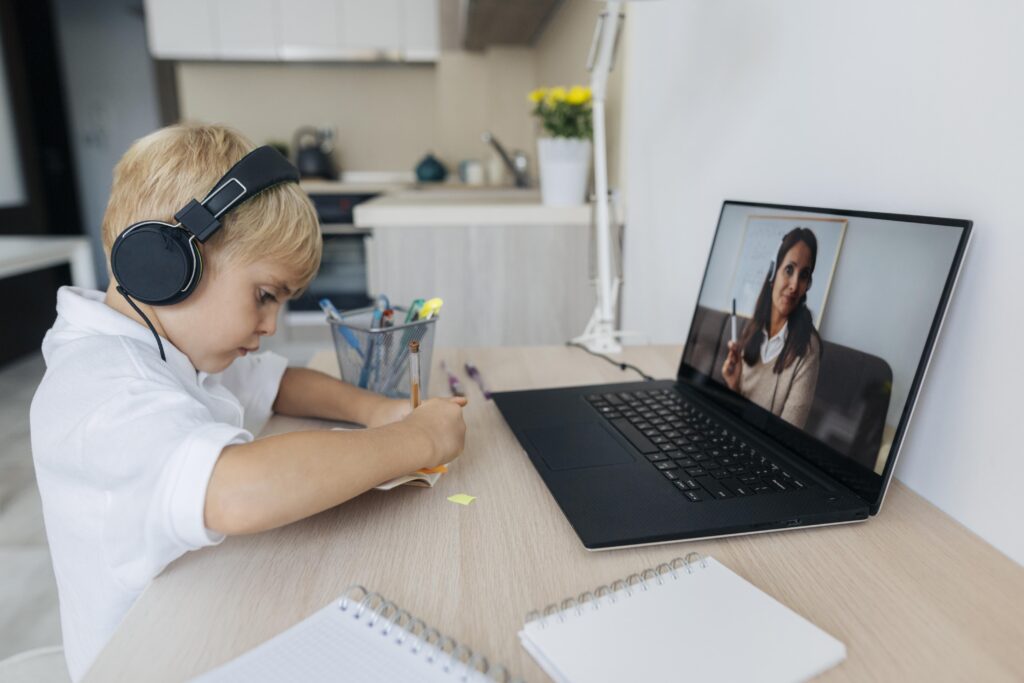
Terapia de lenguaje online para autismo y TDAH: ¿Es realmente efectiva? Cuando un niño recibe un diagnóstico de Trastorno del Espectro Autista (TEA) o Trastorno por Déficit de Atención e Hiperactividad (TDAH), la prioridad de los padres es encontrar la mejor intervención posible. En la búsqueda de soluciones, surge una duda recurrente: ¿Es la terapia de lenguaje online para autismo una opción válida o mi hijo necesita estar en un consultorio físico para progresar? Históricamente, se pensaba que los niños con retos en la comunicación social o la autorregulación no se beneficiarían de la telepráctica. Sin embargo, la experiencia clínica y los estudios más recientes han demostrado que la modalidad virtual no solo es efectiva, sino que en muchos casos ofrece ventajas que la terapia presencial no puede igualar. En MZ Therapeutic Consultants, hemos sido testigos de avances asombrosos en niños bilingües que acceden a nuestra plataforma desde la seguridad de sus hogares. Rompiendo el mito: ¿Pueden los niños con neurodiversidad enfocarse en una pantalla? La mayor preocupación de los padres es la atención. «Mi hijo no se queda sentado» o «se distrae con facilidad» son frases que escuchamos a diario. La realidad es que la terapia de lenguaje online para autismo no busca que el niño esté inmóvil frente a una computadora durante 45 minutos. La telepráctica moderna es dinámica. Utilizamos herramientas digitales interactivas, juegos visuales de alta motivación y, sobre todo, el apoyo del padre o cuidador como facilitador. Para un niño con TDAH, el entorno digital suele ser mucho más estimulante y gratificante que un consultorio médico tradicional, lo que aumenta su tiempo de atención sostenida. Beneficios de la terapia de lenguaje online para autismo y TDAH El hogar como entorno seguro y natural Para un niño con autismo, los cambios de ambiente pueden generar ansiedad o crisis sensoriales. El tráfico, los ruidos de una sala de espera y las luces fluorescentes de una clínica pueden ser barreras para el aprendizaje. Al recibir la terapia en casa, el niño está regulado emocionalmente, lo que permite que su cerebro esté listo para aprender. Además, la generalización del lenguaje ocurre de forma orgánica: el niño aprende a comunicarse en el lugar donde realmente vive. El modelo de entrenamiento a padres En MZ Therapeutic Consultants, creemos que el mejor terapeuta es un padre informado. La terapia de lenguaje online para autismo nos permite trabajar codo a codo contigo. Mientras la Dra. Zapata o su equipo dirigen la sesión, tú aprendes estrategias de modelado y comunicación que podrás aplicar las 24 horas del día, los 7 días de la semana. Esto multiplica los resultados exponencialmente. Adaptaciones específicas para el éxito terapéutico No todos los niños son iguales, y la terapia online permite una personalización extrema: ¿Qué dice la ciencia sobre la telepráctica en la neurodiversidad? La American Speech-Language-Hearing Association (ASHA) ha validado la telepráctica como un modelo de servicio equivalente al presencial. Diversos estudios indican que los niños con TEA suelen responder positivamente a los estímulos visuales de las computadoras y tablets, lo que facilita el desarrollo de habilidades de atención conjunta y seguimiento de instrucciones. La terapia de lenguaje online para autismo ha demostrado ser especialmente útil para trabajar: MZ Therapeutic Consultants: Expertos en intervención bilingüe Para las familias hispanas en Estados Unidos, el reto es doble. Necesitan un terapeuta que entienda el diagnóstico de autismo y que, además, respete el bilingüismo de la familia. A menudo, se les dice erróneamente a los padres que «hablen solo inglés» para no confundir al niño con autismo. Nosotros combatimos este mito. La ciencia es clara: el bilingüismo no causa retrasos y retirar el español solo aísla al niño de su núcleo familiar. Nuestra terapia de lenguaje online para autismo se ofrece en ambos idiomas, fortaleciendo el vínculo afectivo y comunicativo. Cómo saber si mi hijo es candidato para la terapia online Aunque la mayoría de los niños se benefician, el éxito depende de una evaluación inicial profesional. En MZ Therapeutic Consultants, analizamos el perfil sensorial, el nivel de atención y el apoyo familiar disponible para diseñar un plan a medida. La terapia de lenguaje online para autismo no es solo una alternativa conveniente; es una herramienta poderosa que utiliza la tecnología y el entorno familiar para maximizar el potencial de los niños neurodiversos. Si buscas resultados basados en la ciencia, el respeto a tu cultura y la comodidad de tu hogar, la telepráctica es el camino. ¿Listo para ver a tu hijo prosperar? Agenda una consulta hoy mismo y descubre cómo transformamos la pantalla en un puente hacia la comunicación efectiva.

EnglishenEnglishEnglish
Scroll al inicio